
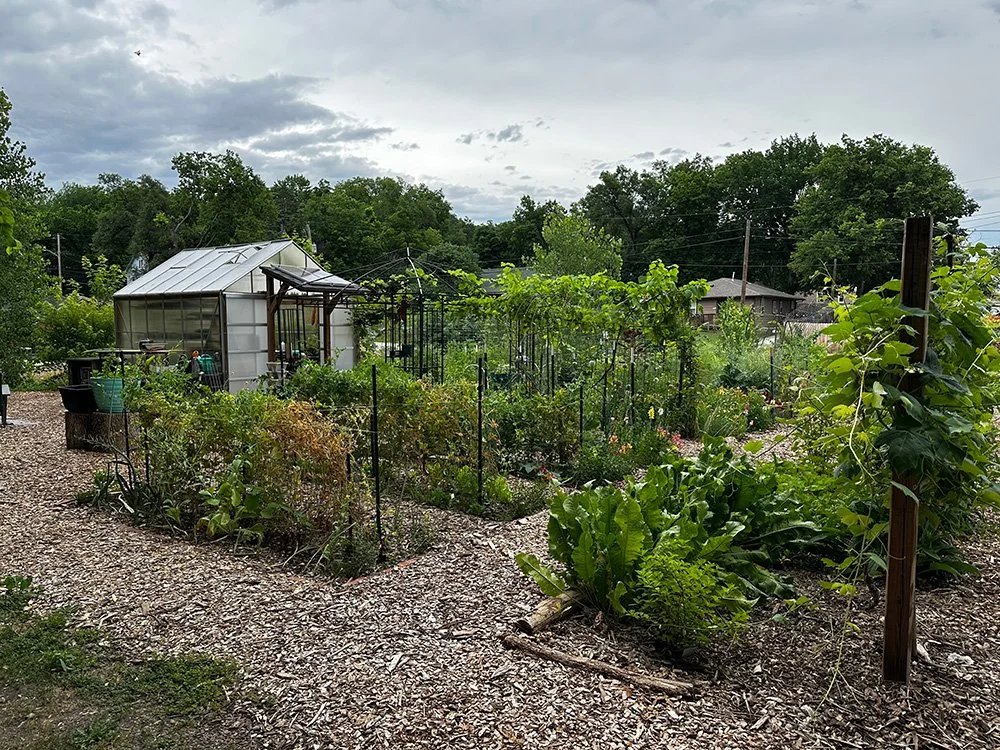
I first met Rick Mareske last June at the Rolling Prairie Farmers Alliance Community Supported Agriculture (CSA) 30+ Years Celebration. He told me that he got his High Tunnel under NRCS’s Environmental Quality Incentives Program, or EQIP, and has had three EQIP contracts for Forest Stand Improvement (practice 183), a Climate Smart Ag & Forestry practice. “My forest stand improvement is still active. I’ll have it completed this fall. I’ve done the honeysuckle removal on 10 acres and have completed thinning some trees.” He tried to implement Water Harvesting Catchment (practice 636), but that project didn’t go anywhere.
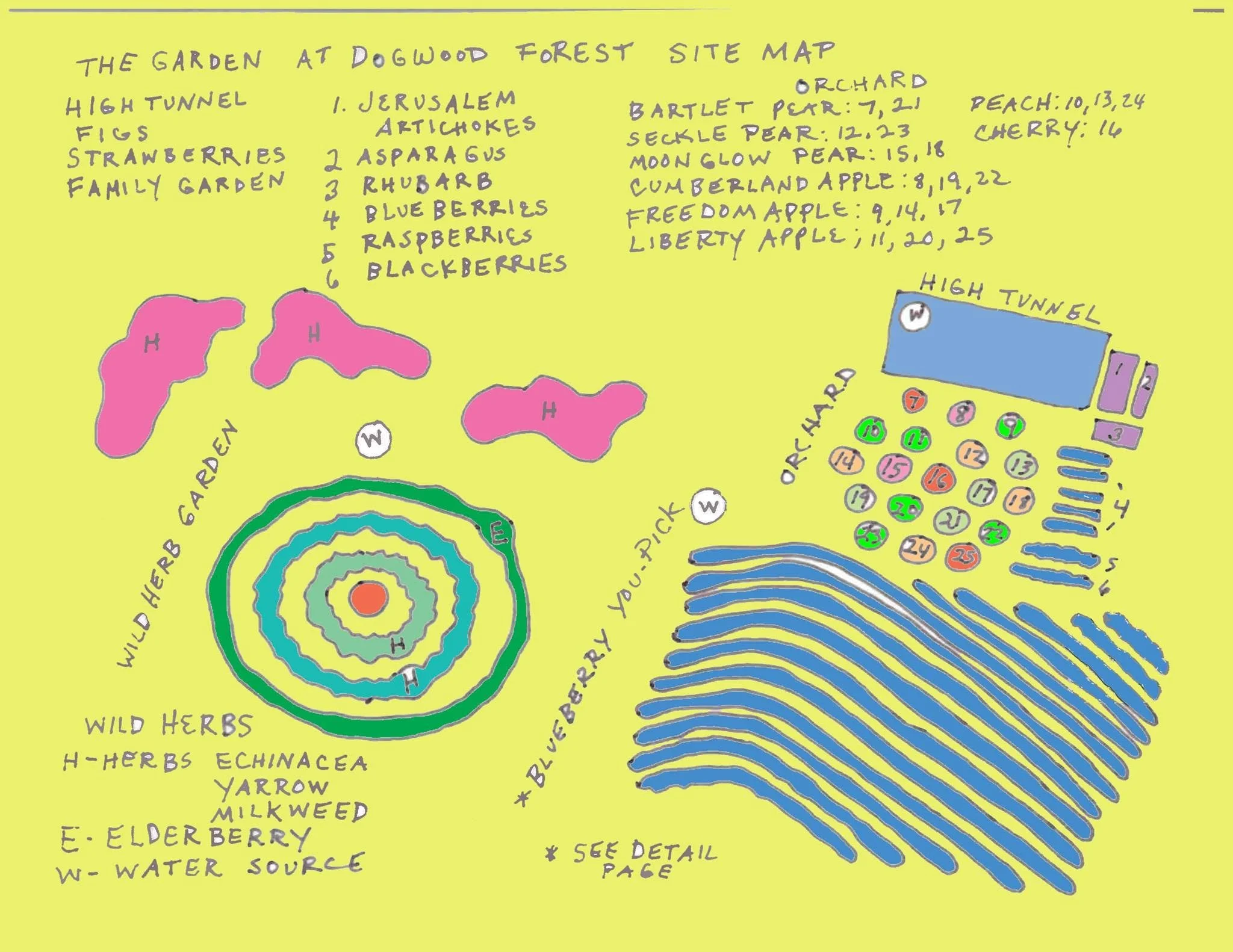
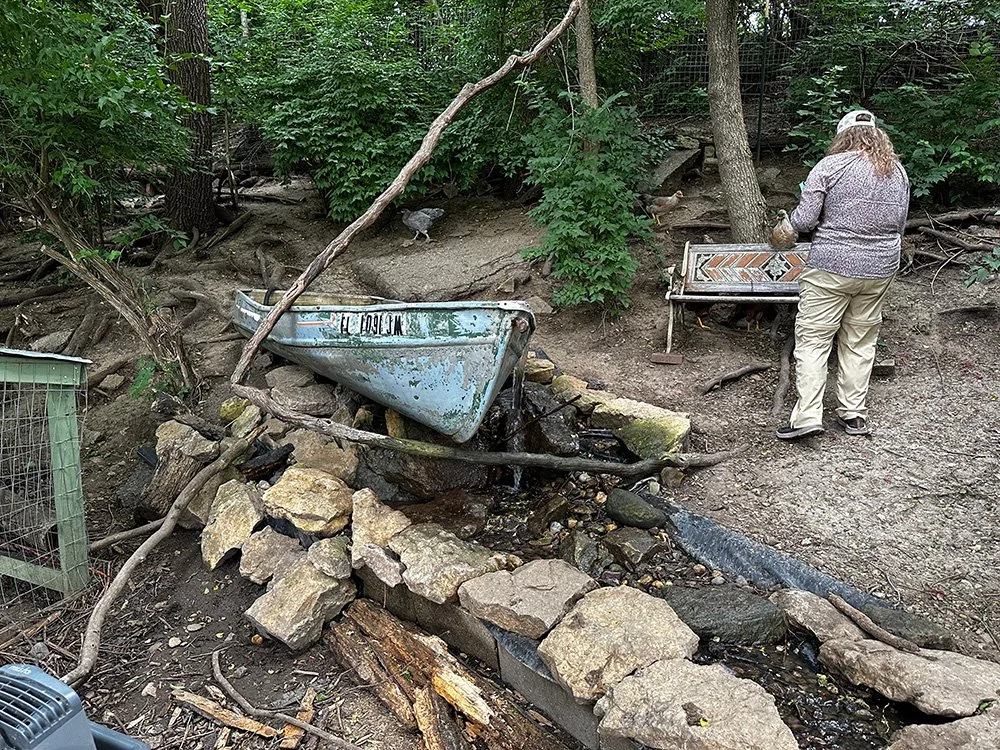
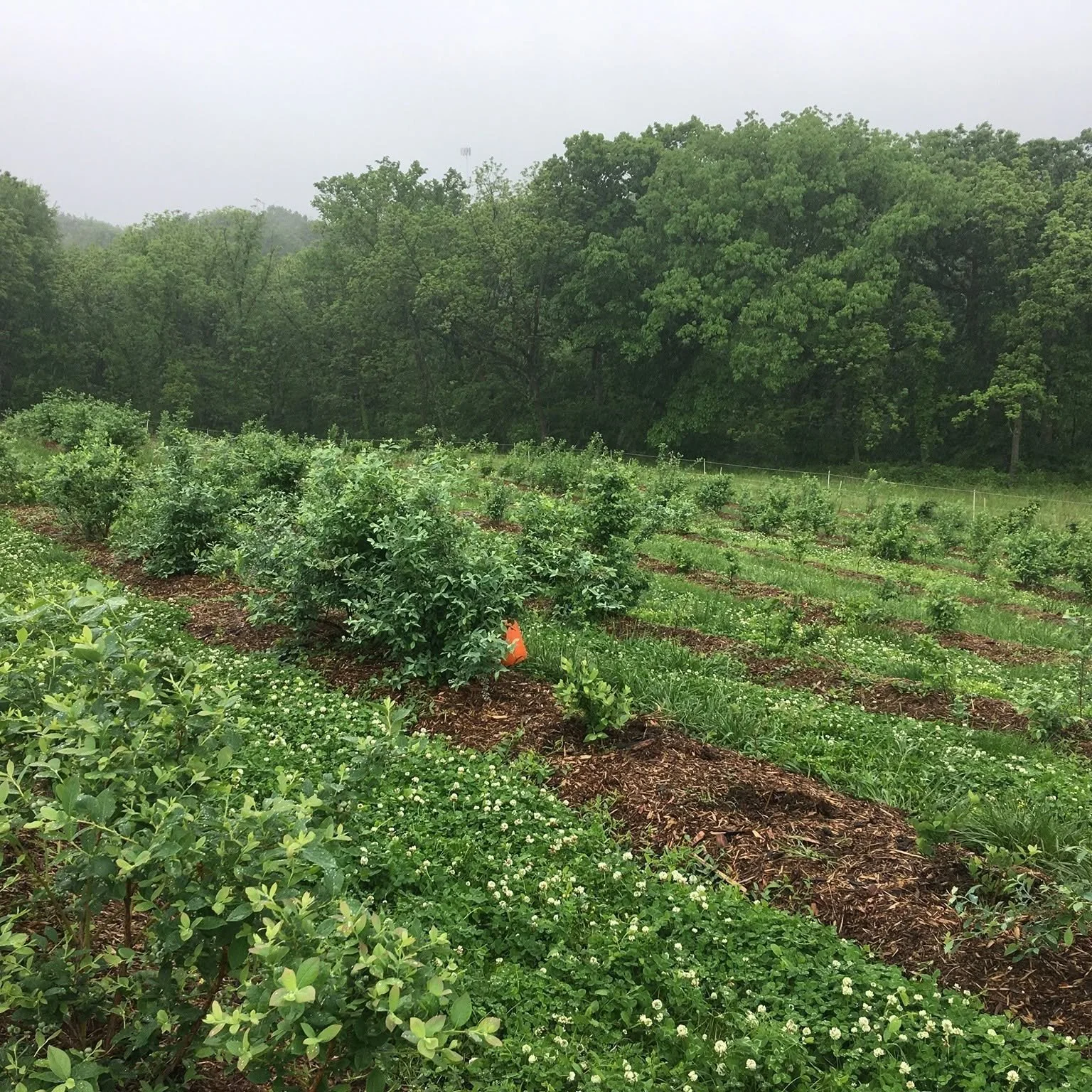
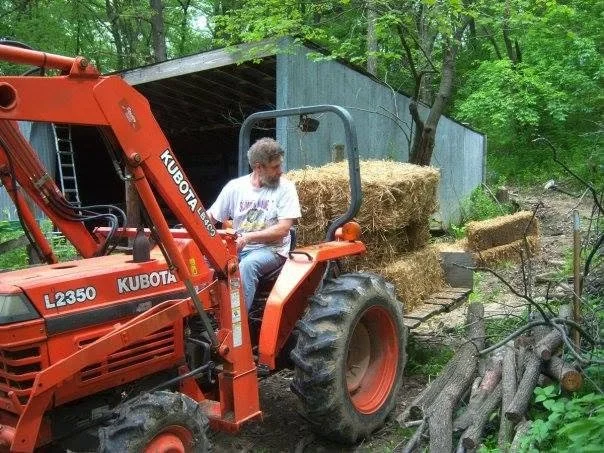
Rick and his wife own The Garden at Dogwood Forest in Kansas City, Kansas, which is a blueberry you pick and has a 40-tree orchard, blackberries, elderberries, figs, strawberries, a few annuals, medicinal and culinary herbs and 35 acres of woods where they are moving towards more intentional forest farming.
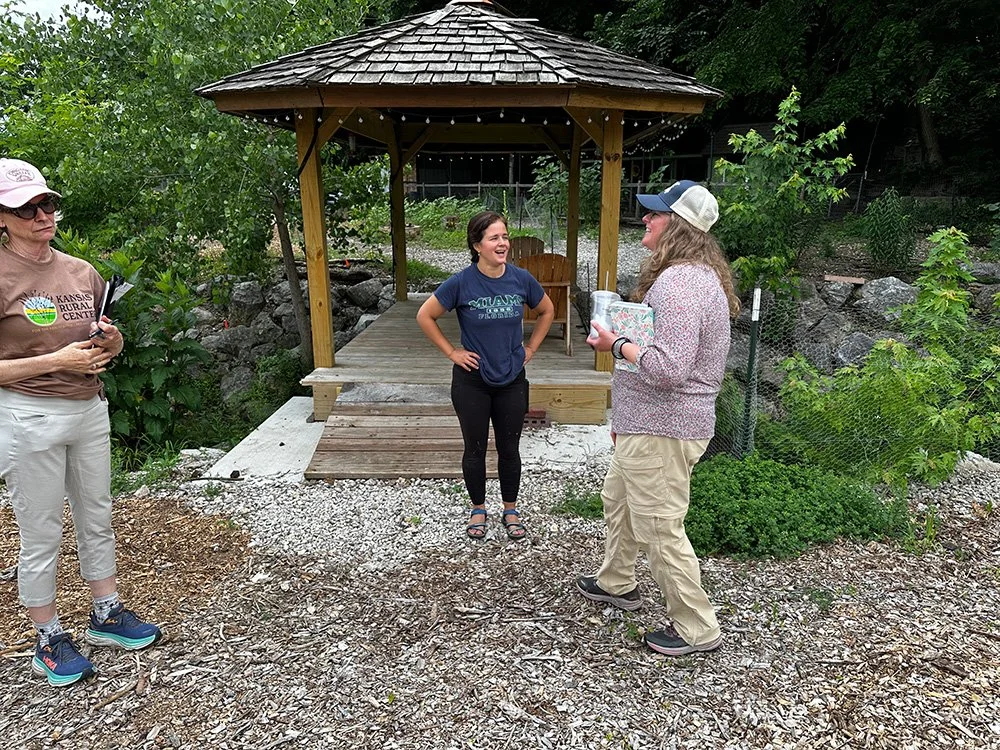
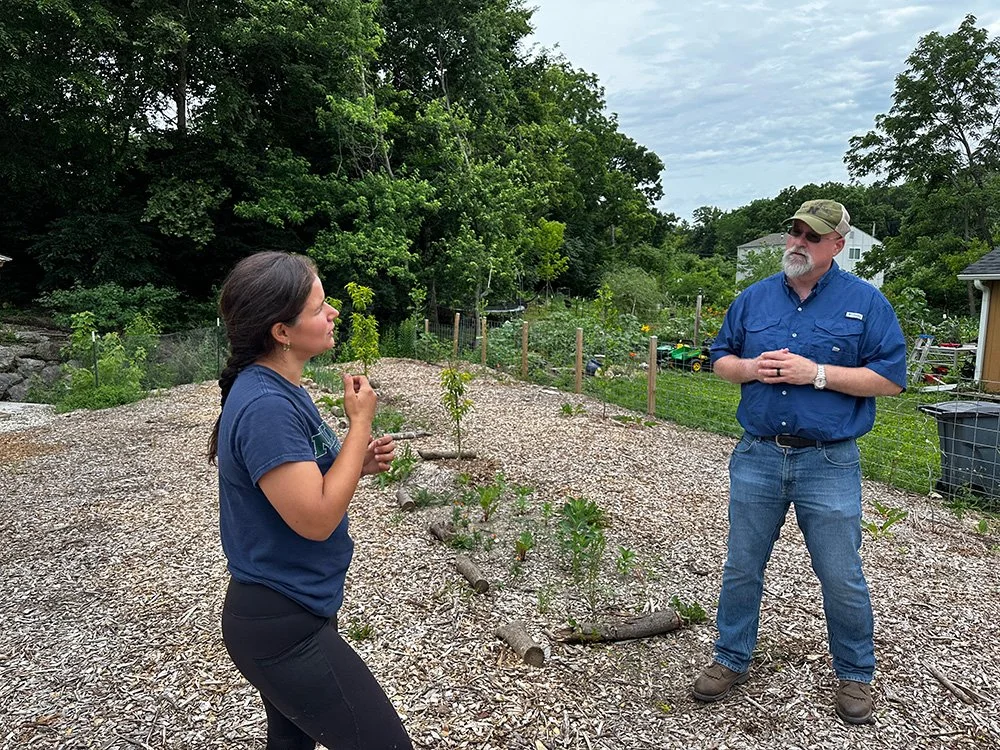
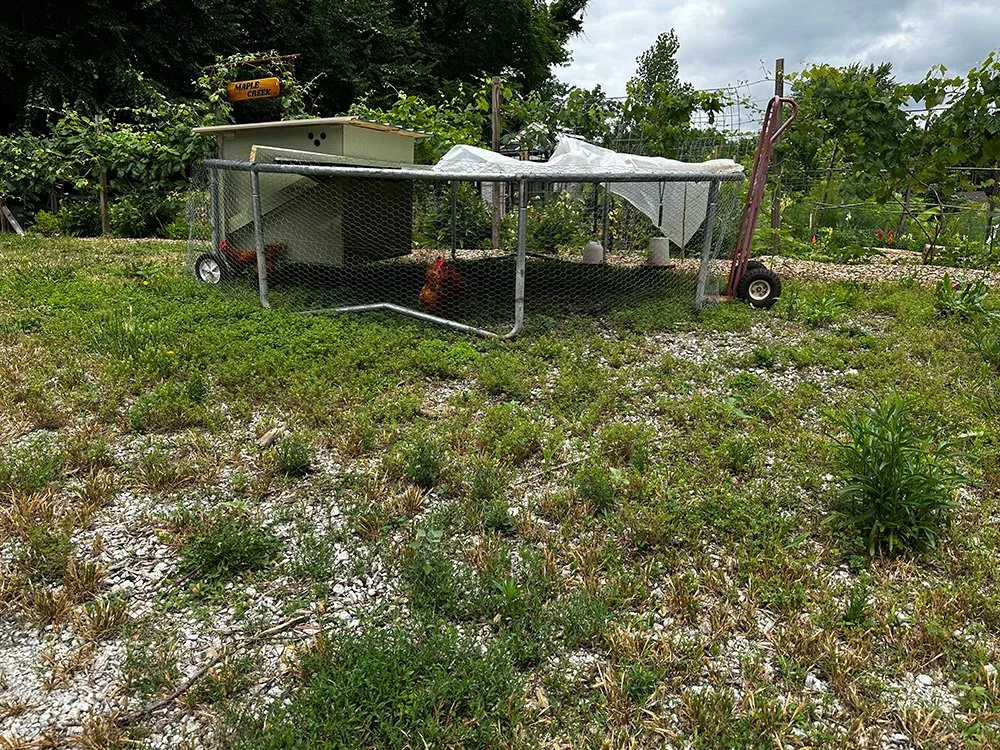
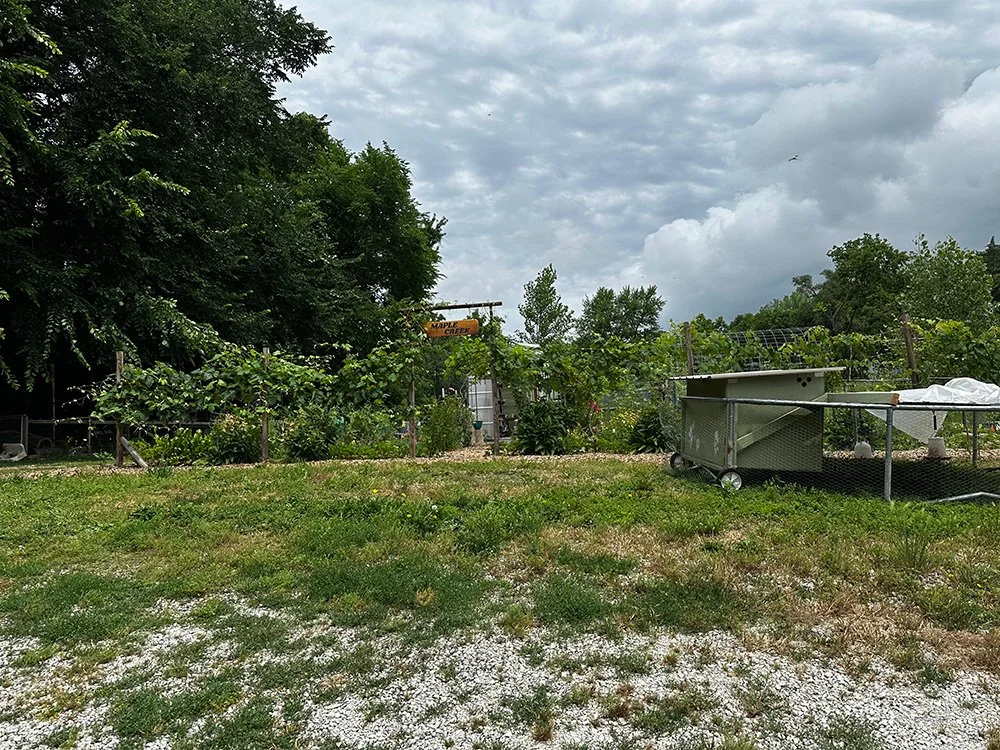
I knew after talking with Rick for only a few minutes he would be an excellent mentor for Sandra Machin, who I had just visited with, at her diversified farm, Maple Creek Urban Farm, also in Wyandotte County like Rick’s farm. Sandra showed us where she planned to put her first high tunnel but explained she had been intimidated by the questioning from the Unified Governments (UG) of Kansas City, KS and Wyandotte County.
During this site visit, Tim Miller, the State Urban & Ag Non-Traditional Conservationist, viewed the operation and offered recommendations, which included suggestions regarding a proposed orchard and/or raised beds and soil testing information. After I connected Sandra to Wyandotte County’s KS State Extension Office for soil testing instructions and prices for tests additional to the free basic test, she promptly got samples and took them to the Extension office. Once received, Tim Miller worked with Sandra on the results.
A few months later, during the EQIP-Focused Urban Farm Tour in KC, Rick told me he would be happy to mentor Sandra to get her application submitted for Cost-Share and Technical Assistance under EQIP for high tunnel installation and raised beds. He also volunteered to help her deal with the UG permitting, as he had gone through a similar process for his high tunnel.
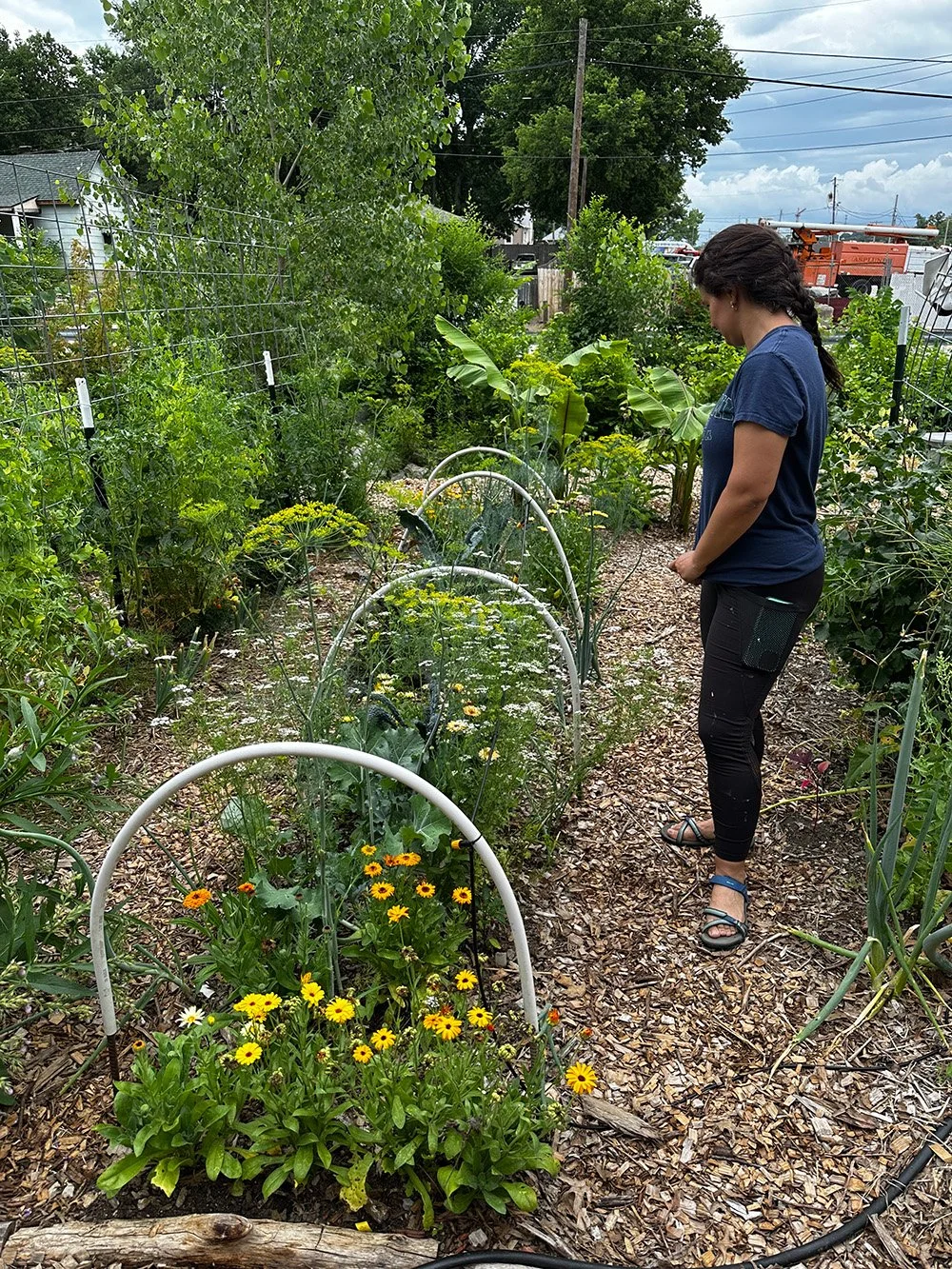
They both wasted no time, Rick visited Maple Creek just a few weeks later saying, “We discussed raised beds and filling them with uncontaminated soil and compost and row covers like Ami at Longfellow Farm in KC got through Neversink ( I want them too). I didn’t talk to her about irrigation. Tim McCoy, (the NRCS District Conservationist for Rick and Sandra), advised against that system, saying the recommended irrigation practice may be overcomplicated for an otherwise simple watering system. He would only recommend if precision and exact timing were the desired outcome.”
To make the national batching deadline of January 15, Sandra submitted her application on January 7, just two months after the KC Urban Farm Tour when Rick agreed to be a mentor, and soon thereafter signed and submitted the KRC Mentorship Agreement. The day after Sandra submitted her application she e-mailed, “I just want to thank Rick for his encouragement and motivation to get it done. I don’t think I would have done it without him; I was probably seeing this year pass in front of my face without any movement from my end. So, Thank you! Thank you, Jackie, for putting it together.”
As required in the KRC Mentorship Agreement, Rick submitted a report for reference and will serve as a guide moving forward. After this successful completion, the mentorship pair agreed to speak at KRC’s annual Food and Farm Conference in February during the “EQIP Experiences and Endeavors” session. They both walked through their processes of working with NRCS to an audience of about twenty, of which two members have subsequently connected with me about EQIP for their farms.
Sandra’s closing remark was, “I felt like an eight-foot wall was in front of me, but Rick said, no no no it’s not that big!”
In addition to Rick helping Sandra interact with the Unified
Government regarding her plans for a high tunnel, Lydia Nebel, KC Farm School Manager and Jacob Chapman who runs Moose Paw Farm in Spring Hill, KS accompanied her in a recent meeting with the entity. Sandra said, “they really helped me.” Tim McCoy continues to assist Sandra including connecting her to the contact at the Wyandotte County FSA office to update her Farm Record to include newly purchased property where the high tunnel will be erected.
Article by: Jackie Keller, Program Coordinator - KRC
For more information on EQIP contact Jackie Keller at jackie @ kansasruracenter.org
Find your own FSA office here: www.farmers.gov/working-with-us/USDA-service-centers
How and Why to Get a Farm Number: www.rafiusa.org/beginning-farmers-how-and-why-to-get-a-farm-number/
Find out what programs are available through Kansas: www.nrcs.usda.gov/state-offices/kansas#programs