
Main Street Mercantile recognized nationally for rural grocery innovation, resilience, and community impact
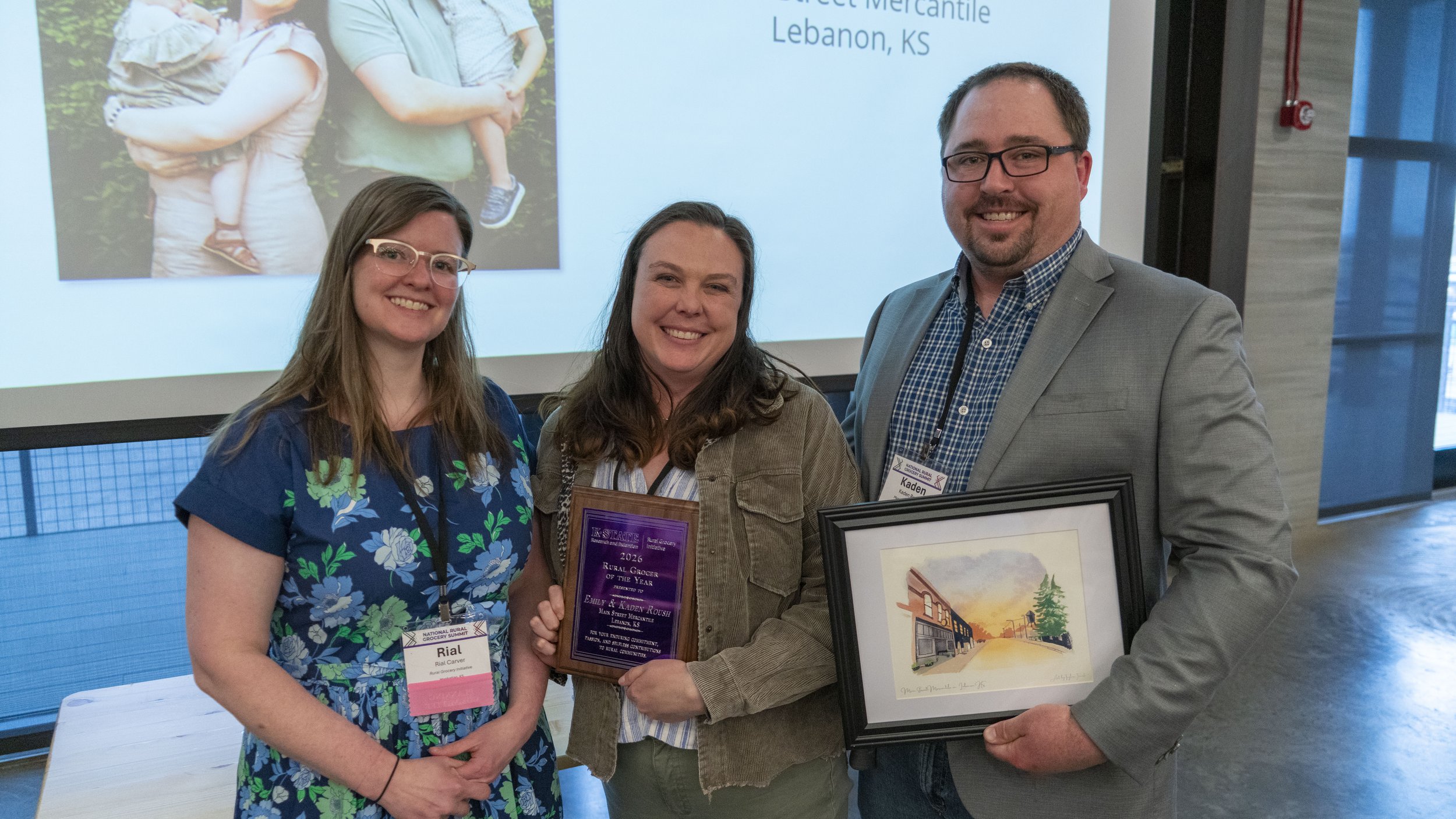
Emily and Kaden Roush, owners of Main Street Mercantile in Lebanon, Kansas, have been named the 2026 Rural Grocers of the Year by the Rural Grocery Initiative during the National Rural Grocery Summit in Fargo, North Dakota.
The national award recognizes independent grocers who demonstrate outstanding commitment to community engagement, innovation, and resilience in sustaining rural grocery access.
“At our core, we are farmers. R Family Farms is where our work began, raising livestock and selling farm-raised meat directly to consumers.” said Emily Roush, but facing the reality of rural food access is what became their motivation for opening the Main Street Mercantile.
They realized that producing food was only one piece of the puzzle. If rural communities lose their grocery stores, families lose access to food close to home, farmers lose a potential local retail outlet, and small towns lose one of their remaining gathering places.
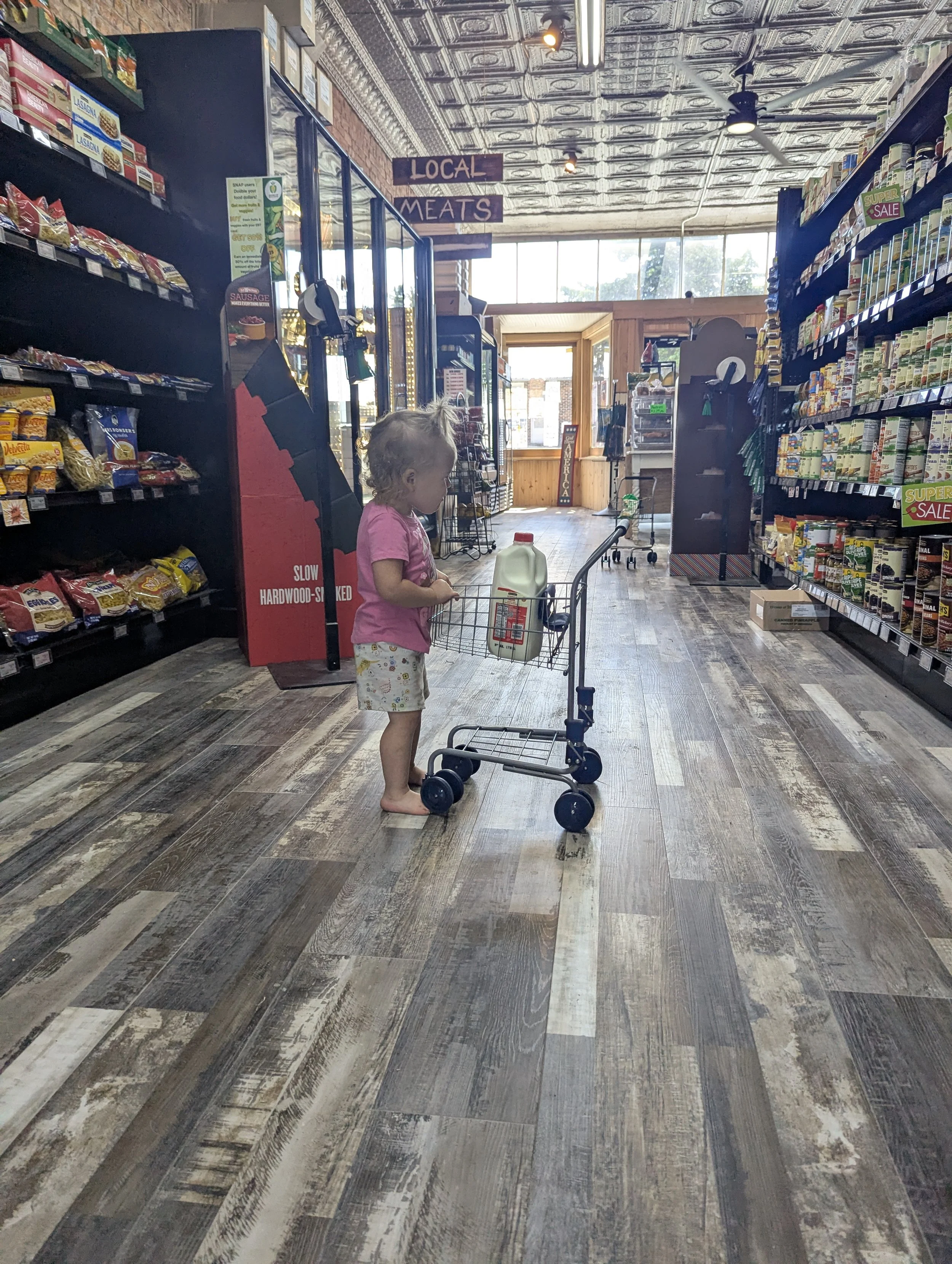
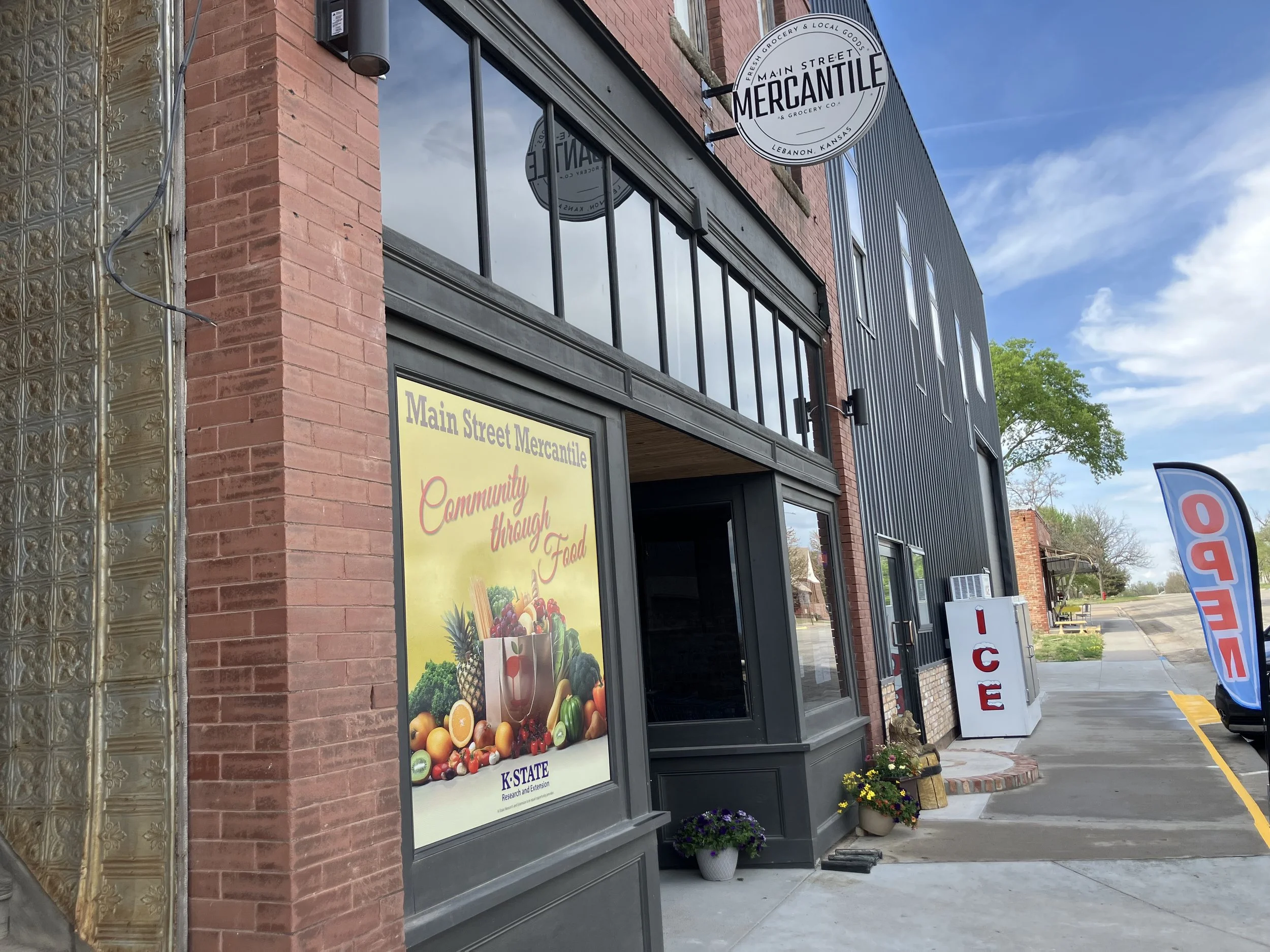
In a town of fewer than 200 people, a grocery store is more than a place to buy milk and bread. The Roush’s knew what it would mean if the town’s existing store disappeared. When the opportunity came to purchase the grocery store in Lebanon in 2022, it was not something they had originally planned as part of their career paths. The building and business both needed major reinvestment, and they knew it would be a heavy lift. Now, “Main Street Mercantile” has become the kind of place visitors to Lebanon do not expect to find. It’s a renovated small-town market with a full butcher counter, Kansas-made goods, farm-raised meats, and a sense of hospitality that turns a quick stop into a reason to come back. Mainstreet Mercantile provides food access, jobs, connection, dignity, and a reason for people to keep coming downtown.
The Roush’s have renovated and reimagined the store while strengthening the essential grocery programs rural customers depend on, including fresh produce, staple groceries, and meat cut fresh in-store.
Emily reflects that “It has been one of the hardest things we have ever taken on, but it has also shown us how much possibility still exists in rural communities when people are willing to reinvest and keep adapting.”
Through partnerships with R Family Farms and other regional producers, Main Street Mercantile now offers one of the largest selections of meat cuts and flavors available in a single retail location in north-central Kansas and the surrounding multi-state region, with more than 300 unique options across pork, beef, chicken, bison, turkey, lamb, and other farm-raised products.
The Roush’s have also built relationships with other small grocery stores and rural food businesses where possible. Some of that has been formal, and some of it has been informal — sharing ideas, comparing vendors, learning from what others are doing, and looking for ways to problem-solve together.
“One of the realities for small rural stores is that none of us have the scale of a large chain, so collaboration and shared learning become really important.” says Emily.
Owning the store has changed nearly every part of their lives and has added an entirely new layer of responsibility to their farm, family, and existing businesses. It has required grant writing, fundraising, remodeling, staffing, marketing, long hours, and constant problem-solving.
Emily reflects that their AWG cooperative membership has been especially important from an operational standpoint. “For a rural grocery store, buying power and supply chain access matter. Being part of a wholesale cooperative gives us access to the grocery products our customers depend on while still allowing us to maintain local ownership and build out the more unique parts of our store.”
At Main Street Mercantile, one of the most unique pieces of their model is the connection between the farm and the store. Through R Family Farms and other regional producers, they can offer more than 300 unique meat cuts and flavors across pork, beef, chicken, bison, turkey, lamb, and other farm-raised products. The selection gives customers access to local and regional foods in a way that would be difficult for many individual farms to offer on their own. The store has become a visible example of how rural businesses can preserve essential services while creating something distinctive enough to draw people in.
“Emily and Kaden exemplify the spirit of the Rural Grocery of the Year award,” said Clara Misenhelter, Program Manager with RGI. “Their dedication and commitment to their community are truly commendable.”
In the nomination, the Roush’s were recognized for restoring and strengthening food access in a rural community, creating local jobs, partnering with area producers, and building a store that serves as both a grocery destination and a gathering place
“This award means a lot because we are still very much in the middle of the work,” said Emily Roush. “Keeping a rural grocery store alive is not easy, but we believe small towns deserve access to good food, gathering places, and businesses that make people proud of where they live. Main Street Mercantile exists because our community kept showing up, and because we believe rural places are worth fighting for.”
The Roush’s were able to use a number of programs, partnerships, and organizations to help move Main Street Mercantile forward. Those include the Rural Grocery Initiative, K-State Research and Extension, the Healthy Food Financing Initiative, the Local Food Purchase Assistance Program, the Northwest Kansas Economic Innovation Center, the Kansas Small Business Development Center, Kansas Department of Commerce grant programs, Rural Energy for America Program support, the City of Lebanon, Smith County, the Northwest Kansas Planning and Development Commission, and their cooperative membership with Associated Wholesale Grocers. Each of those has played a different role, whether through technical assistance, funding opportunities, business support, food system development, infrastructure investment, local partnership, or access to wholesale grocery supply.
The 2026 National Rural Grocery Summit convened more than 300 stakeholders in Fargo to explore strategies for sustaining rural grocery stores and improving access to healthy food in rural communities.
About the Rural Grocery Initiative
The Rural Grocery Initiative, housed within K-State Extension, aims to sustain locally owned rural grocery stores to enhance community vitality and improve access to healthy foods by identifying, developing, and sharing resources that support grocers and rural communities.
About the National Rural Grocery Summit
The National Rural Grocery Summit is the premier networking and resource-sharing venue for independent grocers and rural food access stakeholders. The 2026 Summit was co-hosted by the Rural Grocery Initiative at Kansas State University, the University of Minnesota Extension Regional Sustainable Development Partnerships, and the North Dakota Association of Rural Electric Cooperatives.
For more information about the Rural Grocery Initiative and the National Rural Grocery Summit, visit www.ruralgrocery.org/summit.
Helpful links:
Main Street Mercantile:https://mainstreetmercantileks.com/
R Family Farms: https://www.territorytrading.com/
Rural Grocery Initiative: https://www.ruralgrocery.org/