
Pawnee County Residents Pawnee County Residents Say CAFOs Stink
A Community Learns What’s Coming
For many rural communities, the first sign of a large extractive project comes when construction equipment appears on the horizon. In Pawnee County, Kansas, residents were alerted slightly earlier due to a few citizens watchful eye on the newspaper.
Felix Revello, a Pawnee County resident, first learned about a proposed massive cattle feedlot through a local newspaper notice. The project did not have a formal public-facing name, but the scale was immediately concerning. Early reports suggested an 80,000‑head operation. A Kansas Open Records Act (KORA) request later revealed the true number: 88,000 cattle.
When local resident Merrill Cobble reached out to Sierra Club for help, the issue quickly became a coordinated local and statewide effort. Felix Revello, already involved through the Sierra Club, where he serves on the Executive Committee. Sierra Club has a long history of fighting CAFOs (Concentrated Animal Feeding Operations) in Kansas, particularly. In addition to Revello and Cobble, Craig Volland, a CAFO specialist who has worked on these issues for nearly 30 years and the Socially Responsible Agriculture Project (SRAP) became engaged in the resistance.
Existing CAFOs: A Record of Harm
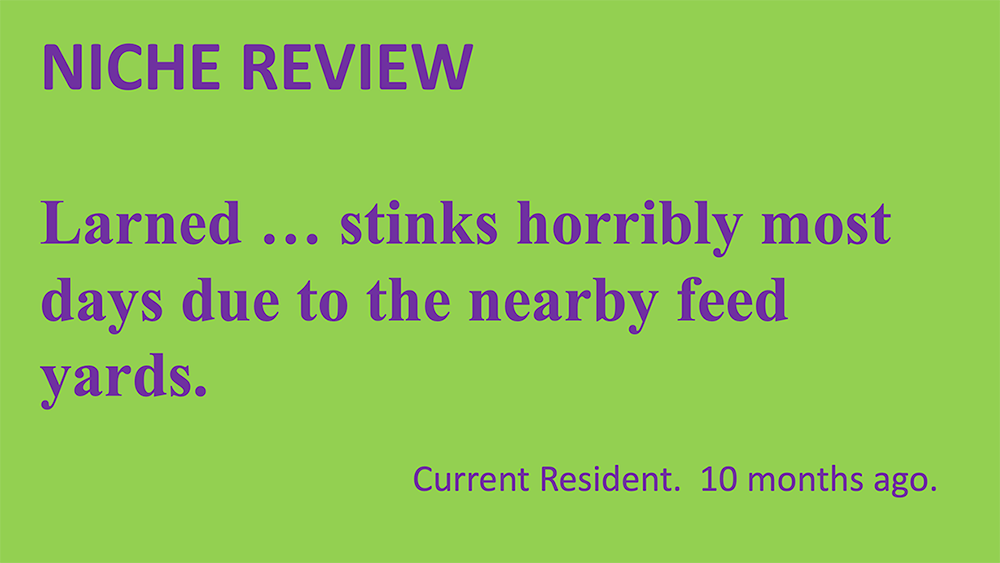
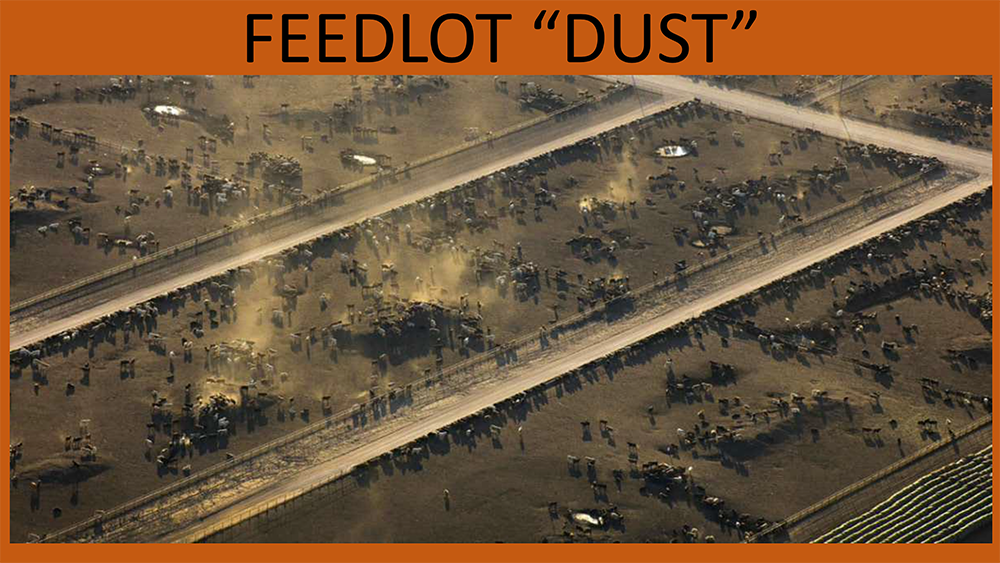
Pawnee County is not new to industrial feedlots. Three major CAFOs already operate in the county, all run by Innovative Livestock Services, Inc. (ILS). Two of these feedlots sit immediately south of the City of Larned, one less than a mile away, another roughly three miles farther south. The third, near Pawnee Rock, adds to the county’s cumulative burden. The two south of Larned are of a larger concern to the community due to “stench” among other issues.
Together, the two southern feedlots have a capacity of roughly 59,000 cattle. Residents have lived with their impacts for decades, with one of the facilities began operating around 40 years ago, and over time, as more cattle were added, the issues compounded. And now, the new proposed feedlot would add 88,000 head, if it goes through.
Air Pollution and Stench
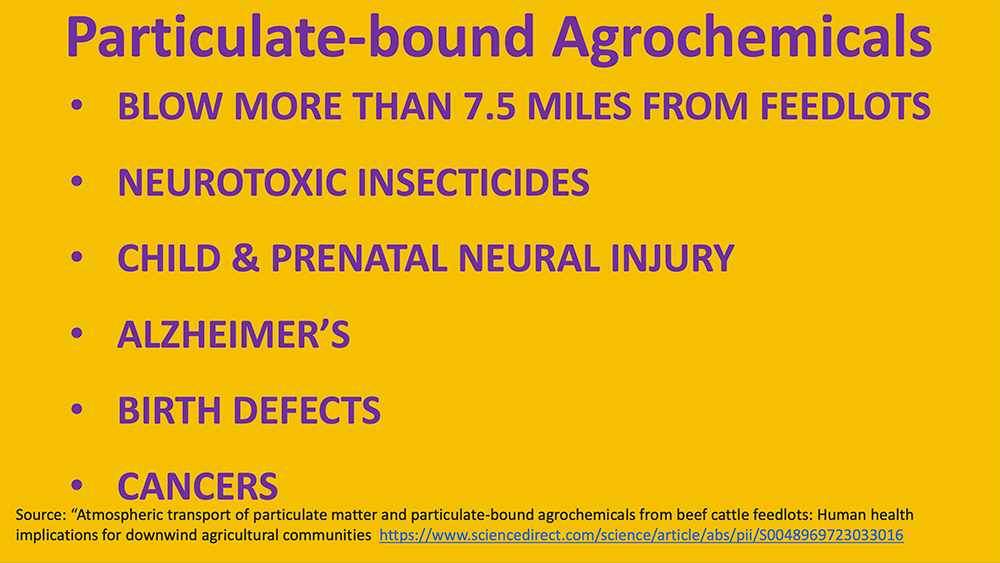
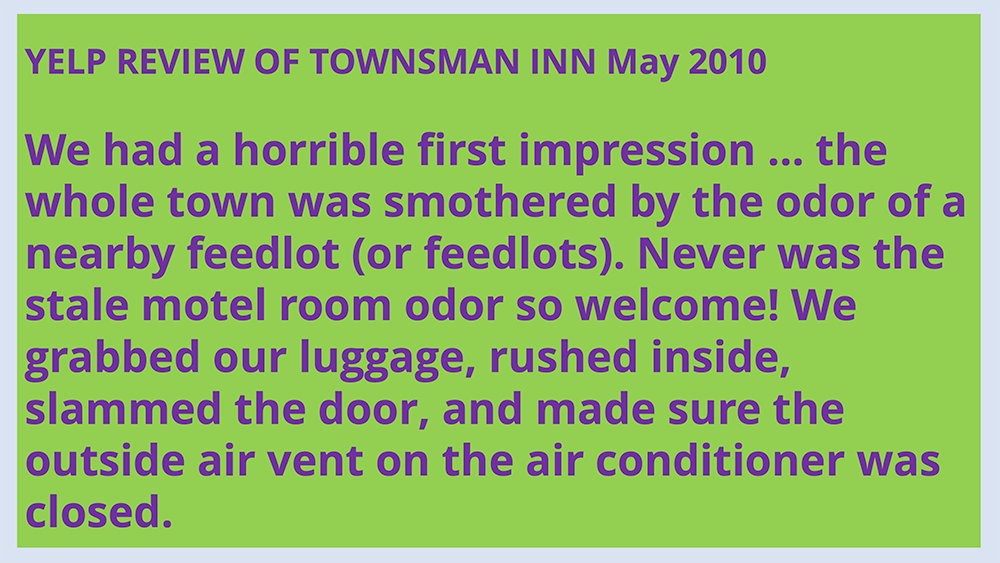
The most widely felt and unpopular impact is the stench. Residents report that the odor travels miles, sometimes reaching Revello’s home more than seven miles northeast of Larned. Prevailing south winds, so significant that Kansas itself is named after the Kansa people, “People of the South Wind,” carry polluted air directly into town.
Fine particulate matter from feedlots affects an area with roughly a 12‑mile radius, meaning much of Pawnee County is routinely exposed. This air pollution has become the primary motivator for public opposition, because far more people can smell the feedlots than drink contaminated water.
Groundwater Contamination
Beyond odor, the environmental impacts are severe. Pawnee County sits atop highly permeable sandy soils and shallow aquifers, which are officially classified as a sensitive groundwater area. This makes groundwater, and what the general public is concerned about - wells, especially vulnerable to contamination.
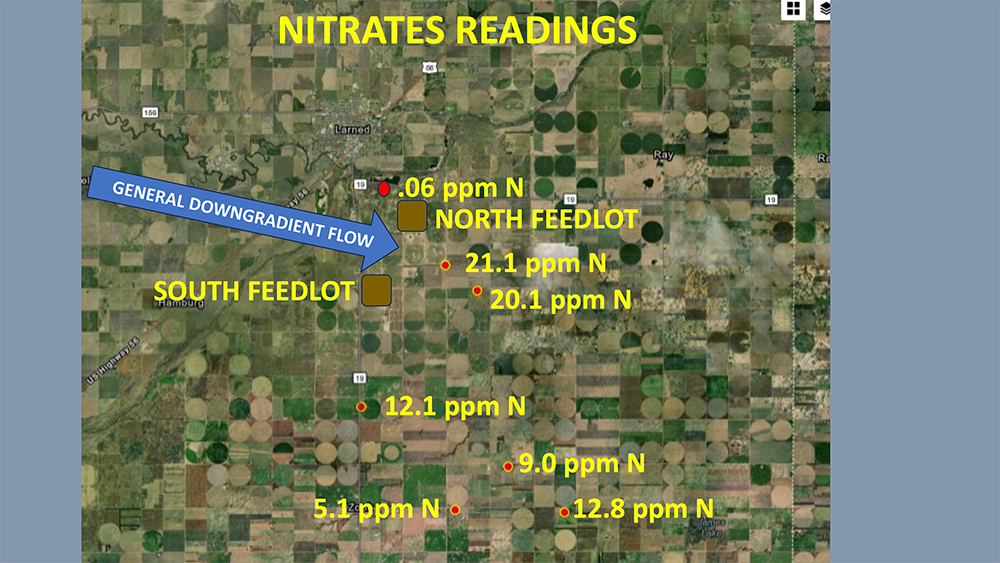
Feedlots generate enormous volumes of manure, which is spread on surrounding fields as fertilizer. According to Revello, the manure is often applied beyond agronomic rates, meaning crops cannot absorb all the nutrients. The excess nitrates move through soil into groundwater.
Sampling of local residential wells, conducted in areas believed to be downgradient from feedlots and heavily manured fields, has shown 100% contamination so far. Nitrate levels regularly exceed the legal drinking water limit of 10 parts per million, with readings of 12, 15, 20, 30 ppm and higher. Some feedlot wells reportedly measure 50–70 ppm.
For residents, this means they can’t drink or in some case even bath in their water without the investment in a reverse‑osmosis systems. This is an immediate monetary strain while the others caused by the feedlots are in the form of taxes spent.
The Proposed 88,000‑Head Feedlot
The new proposed CAFO would be located roughly 10–11 miles south of Larned. If approved, it would more than double the number of cattle already concentrated in Pawnee County.
For many residents, this proposal is a breaking point, and while there was early despair, an assumption that nothing can be done, organizers like Revello, Cobble, and Volland have worked to show that citizens do, in fact, have power.
Revello insists “One of our questions for the commissioners has to be, ‘Well, when do we get enough feedlots? How many feedlots do we need for economic development in Pawnee County?’ At what point will increasing the capacity of feedlots here in Pawnee County start to deter other forms of development? I feel like we may have already reached that point with the two existing feedlots south of Larned.”
Public Reaction: From Despair to Action
Based on Revello’s assessment, around 80% of residents in and around Larned oppose another feedlot. Opposition cuts across political party lines. Felix reflects that “it seems like Republicans have the same sensitivity to feedlot stench, as Democrats do.” But the County Commissioners do not.
Those who do support or tolerate the project live farther away, do business with the feedlots, or hold positions tied to economic development. The Pawnee County Commissioners have strongly favored feedlots, citing promises of job creation (roughly 70 positions) and increased tax revenue (estimated at $500,000 annually).
Opponents counter that these benefits are overstated and offset by hidden costs:
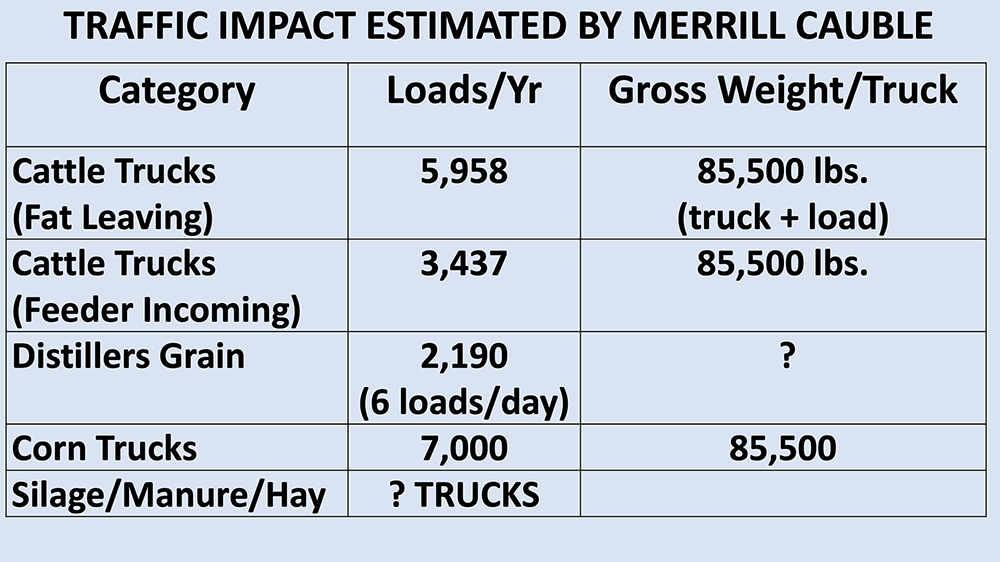
Road construction and maintenance for heavy manure trucks
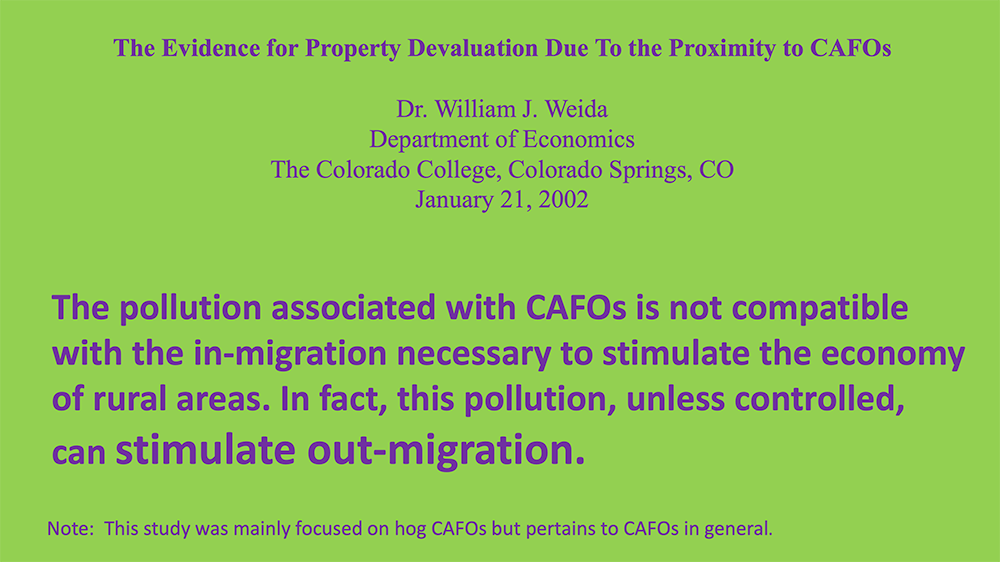
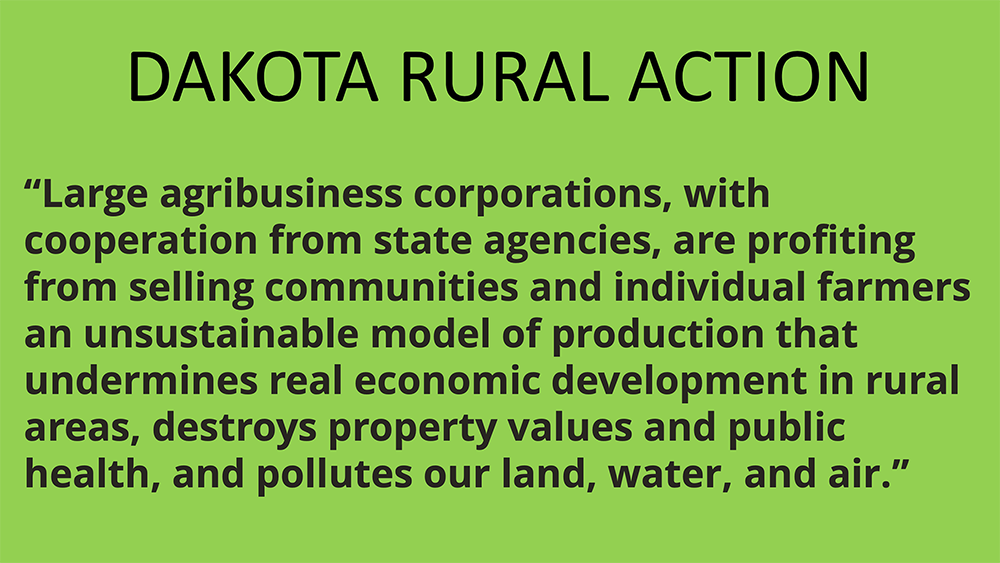
Depressed property values
Out‑migration of residents unwilling to tolerate pollution
Lost opportunities for tourism and other development
Increased stench and groundwater contamination
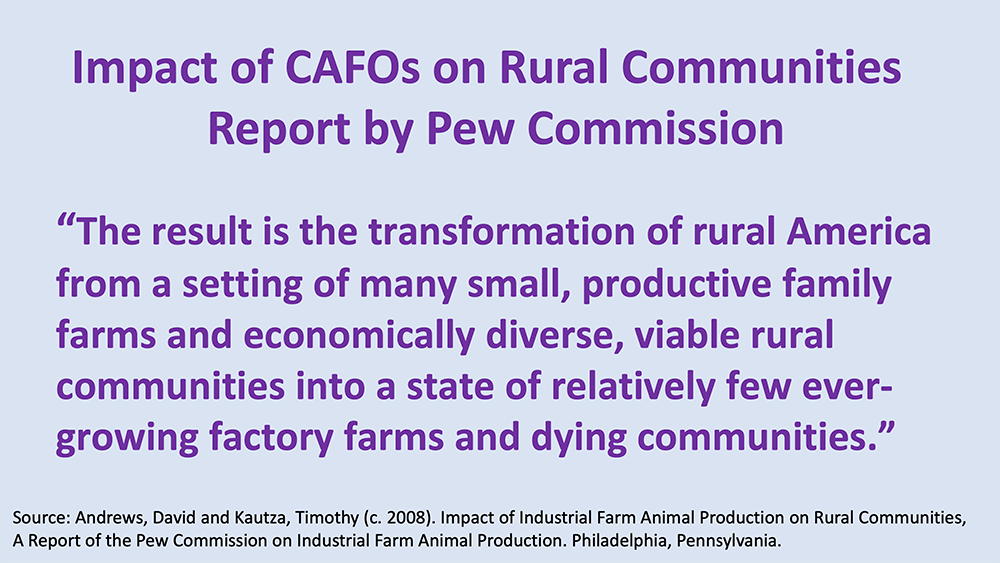
Paraphrased from our conversation Felix stated “You really have to help people understand how they’re getting taken advantage of.” Larned is home to Fort Larned National Historic Site, the Santa Fe Trail Center, a nice public hospital, the State hospital, good schools, and a stable downtown, and penitentiary but residents fear feedlots are undermining, not strengthening, the town’s future. While the increased tax revenue and jobs are enticing, the public would much rather see a less extractive and polluting organization that would keep and not drive away people in the area.
Forcing a Public Hearing
Kansas CAFO permits are handled by the Kansas Department of Health and Environment (KDHE) through its Livestock Waste Management Program. A public hearing is not automatic, meaning it only happens if sufficient public interest is demonstrated.
Through sustained pressure, organizers succeeded in securing a KDHE public hearing on March 25 in Larned, preceded by a locally organized town hall on March 4–5. The town hall educated residents, explained the stakes, and helped people prepare testimony using templates and talking points.
This resulted in: informed citizens showing up, speaking clearly about air pollution, groundwater contamination, and community health. Making their voices heard clearly and concisely.
Leveraging the Law
A key strategy has been grounding advocacy in existing Kansas law. In counties without a separate health board, county commissioners themselves serve as the local Board of Health, giving them both the authority and the responsibility to protect public health. Kansas law also grants counties the power to require investigations into groundwater pollution, a tool that advocates argue has been underused in Pawnee County. In addition, when citizens submit formal complaints, commissioners may be legally obligated to halt operations that are causing pollution until the problems are addressed. With guidance from the Socially Responsible Agriculture Project (SRAP), organizers are preparing written complaints to put county officials on record. The aim is not only to challenge a single feedlot, but to establish a precedent across Kansas—particularly around the poorly regulated export of manure, which frequently escapes meaningful oversight.
One of the most significant regulatory problems with large feedlots involves what is known as the “export” of manure. Under current law, if a feedlot applies manure on land it owns, it is required to develop and follow an agronomic plan to ensure nutrients are applied at safe levels. However, if the manure is exported off the feedlot’s property, say to a different feedlot down the road, the reporting requirements are far weaker. In those cases, the feedlot is generally only required to disclose the nutrient content to the recipient. The feedlot is not responsible for ensuring that the manure is actually applied safely or within agronomic limits once it leaves their property. In Pawnee County, advocates believe the existing feedlots are effectively exporting manure to land they also control, allowing them to exceed safe application rates without triggering the detailed reporting and oversight that would otherwise be required.
What Comes Next
The fight is not limited to the new proposal. The existing feedlots operate on five-year permits, some of which are overdue or coming up for renewal, and advocates plan to demand public hearings for these renewals as well, forcing long-standing pollution to come under public scrutiny. Beyond individual permits, organizers are pushing for broader policy reforms, including mandatory accounting and agronomic testing for all manure exports, required monitoring wells around feedlots, and stronger regulatory connections between groundwater contamination and air pollution enforcement. As Revello puts it, “We can’t pollute our way to prosperity.” Feedlots, he argues, are only profitable because rural communities are forced to endure pollution that urban areas would never accept.
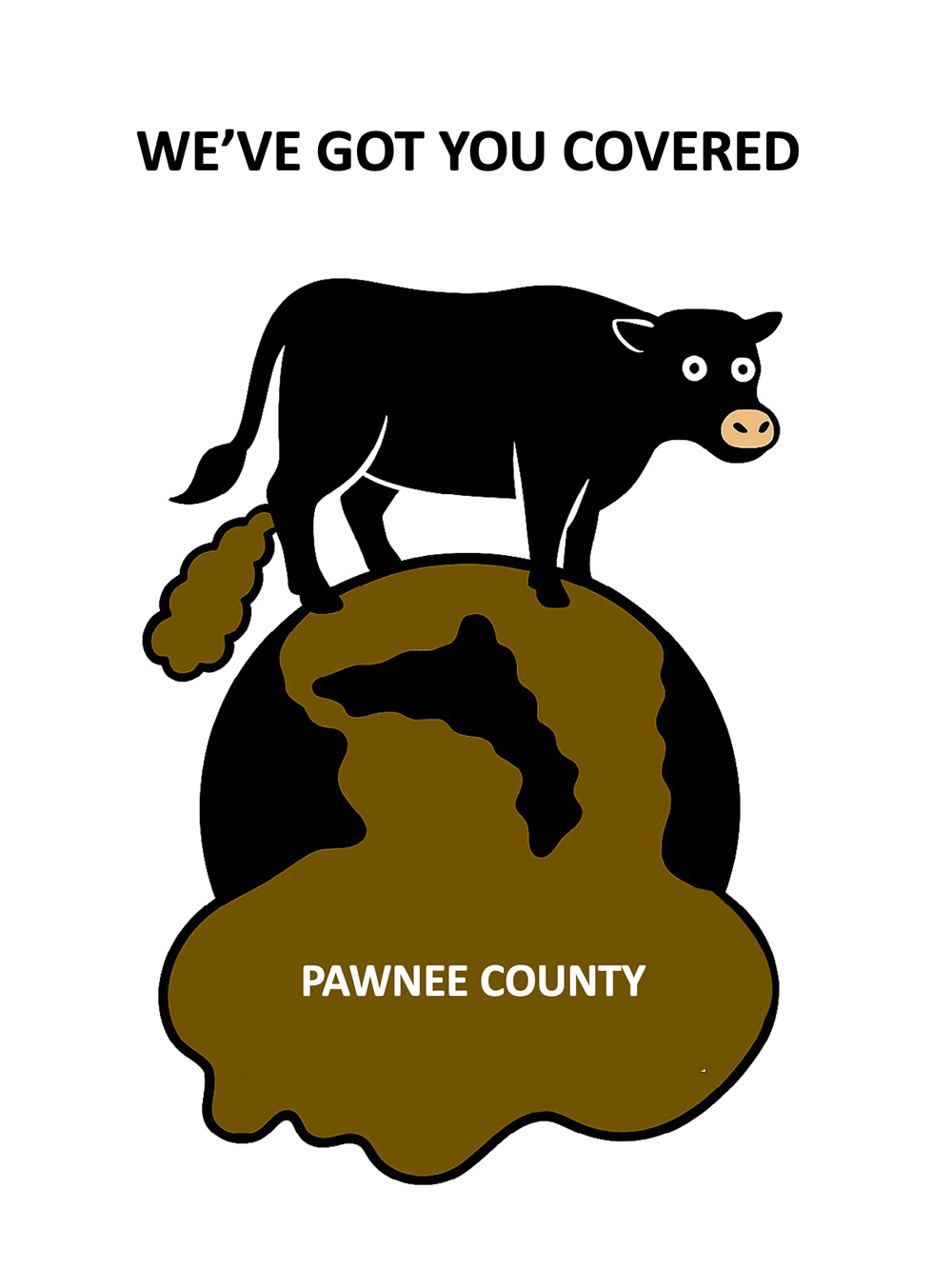
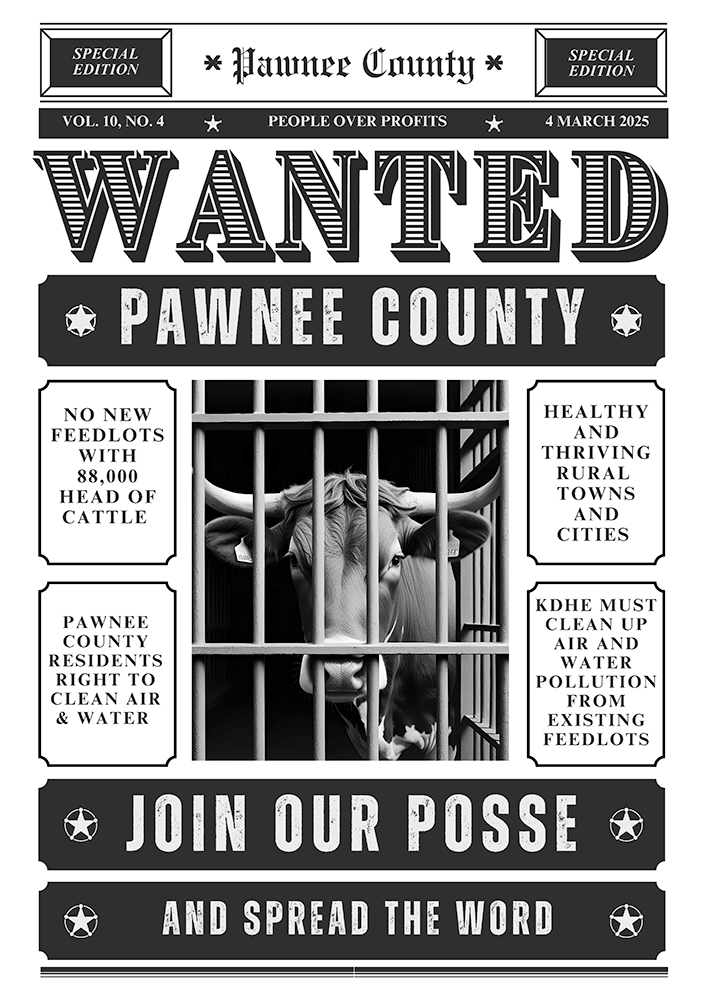
Examples from Feedlot Presentation provided by Felix Revello