
The best way to describe my family’s farming journey is summed up in the Theodore Roosevelt quote “Do what you can, with what you have, where you are.” I grew up in Dover, KS and was involved in 4-H from the age of 5. My older brother and I showed hogs, cattle, and pygmy goats. That is where my interest in farming began. We weren’t from a production ag family, but we always had our 4-H projects around and I enjoyed being around animals. We kept showing until I graduated high school. After a stint at junior college I entered the workforce, working construction and traveling. I met my wife Laura while working in Colorado. We married and settled down in Dover. We knew we wanted to get back into raising livestock, so we started a small hobby farm on our 3 acres. We raised rabbits, chickens, hogs, and bottle calves. At that time, we were just hobby farming on our little patch. I would bring home materials from my construction job, and we built nearly everything ourselves out of what was essentially scrap. We had a nice little homestead going and enjoyed raising our own food. We got the most that we could out of our little 3 acres.
We decided we wanted to get into something that would become more of a business and less of a hobby. Not being on a large piece of land, we knew cattle were out of the question. Having had goats growing up, we decided to try and raise some Boer meat goats to hopefully turn a profit one day. After searching Craigslist for a stock trailer to help with this endeavor, I found one for sale nearby that seemed like a good deal. I drove out to an older man’s farm to take a look at it. He was retiring from his farming operation and no longer needed the trailer. He mentioned that the trailer was a little short and wouldn’t work for large cows or horses. I said that’s fine I’m going to be using it for goats. He paused and said, “Why goats?” I said that my wife and I were looking to start farming and we didn’t have land for cattle. His next statement changed the course of our farm journey. He said, “Goats are hard to keep in. When you get done building your fence, throw a 5-gallon bucket of water at it. If any water gets through, so will a goat! You should get some hair sheep.” When he said this, I did have a flashback of my 4-H pygmy goats standing on top of my mother’s car. Which is where they always seemed to be because they were constantly getting out. Then I asked, “What’s a hair sheep?” He then explained that a hair sheep is a meat sheep that has been bred to shed its wool and doesn’t need to be shorn. He told me how they were good mothers, and easy keepers. I left there with the trailer and pondered the prospect of hair sheep. After doing more research, we decided we would give them a try.
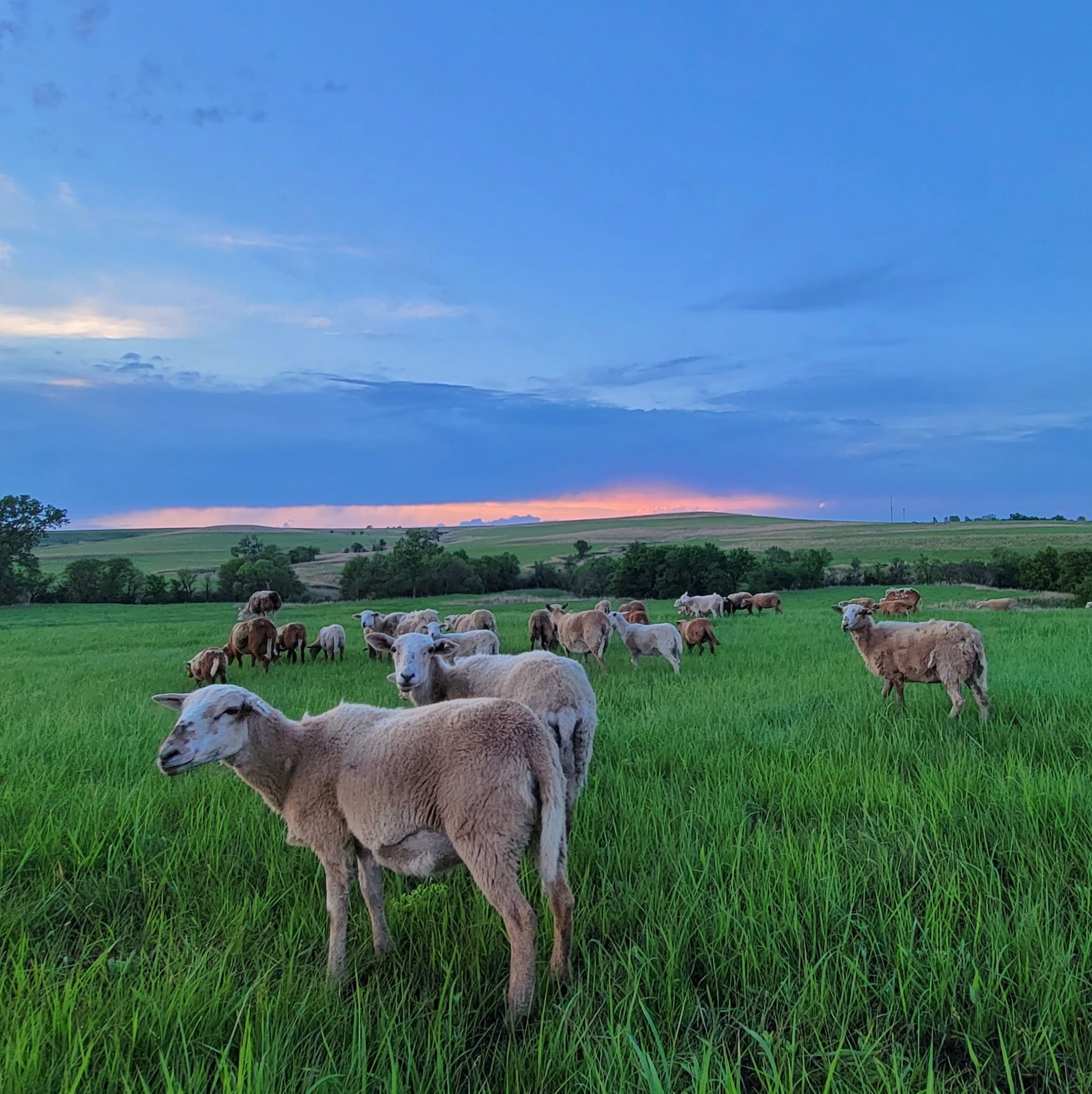
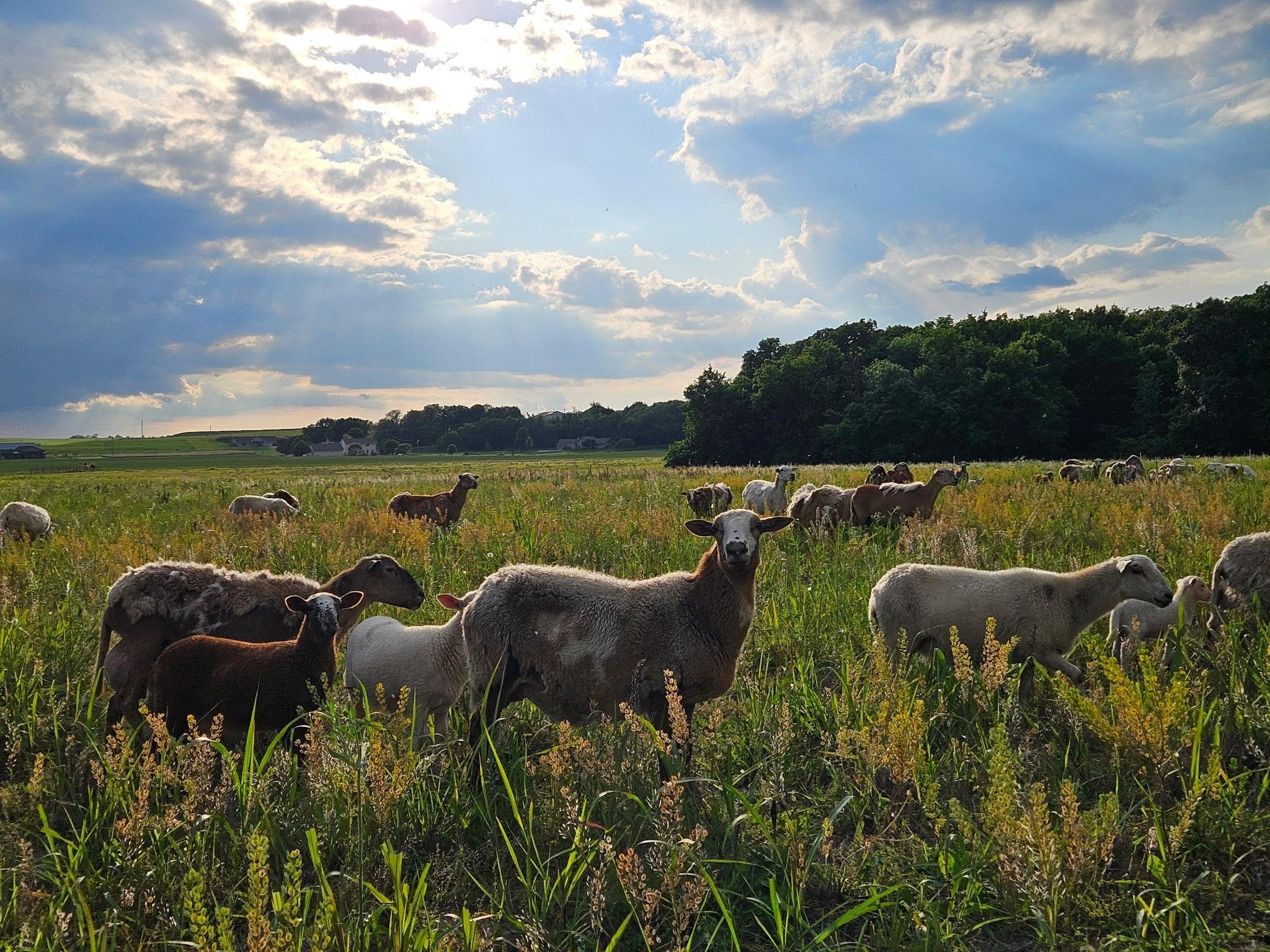
We started small with just three Katahdin ewes. From there we slowly grew our flock. We got out of all the other types of animals and focused on sheep. In 2019 we were able to purchase a new house with more land north of Dover. On this almost 13-acre tract, we kept growing slowly and developing our flock into the type of sheep we wanted to raise. We focused on keeping ewes that did not need worming, hoof trimming, or supplemental feed and could thrive and raise lambs on rotationally grazed pasture alone.
After being at our new farm for a few years, we grew the flock even more. A neighbor mentioned to me
one day that she was having trouble keeping Johnson grass controlled on her 180 acres. I told here that keeping it grazed down can be an effective and ecologically friendly way to control it. She let me start grazing sheep on the field where the Johnson Grass infestation was the worst. After a few years, she trusted us enough to lease her entire farm to us. That opportunity marked the beginning of Crosshair Sheep Farm. We now run a flock of a few hundred hardy, chemical-free sheep. We’re growing grass-fed lambs and regenerating the land with rotational grazing.
We always dreamed about farming, but when we were starting out, the cost of entry seemed overwhelming. Owning hundreds of acres and large herds felt like a far-fetched dream. So we did what we could with what we had. We focused on raising the best sheep possible, improving the land we were entrusted with, and taking advantage of opportunities when they came along.
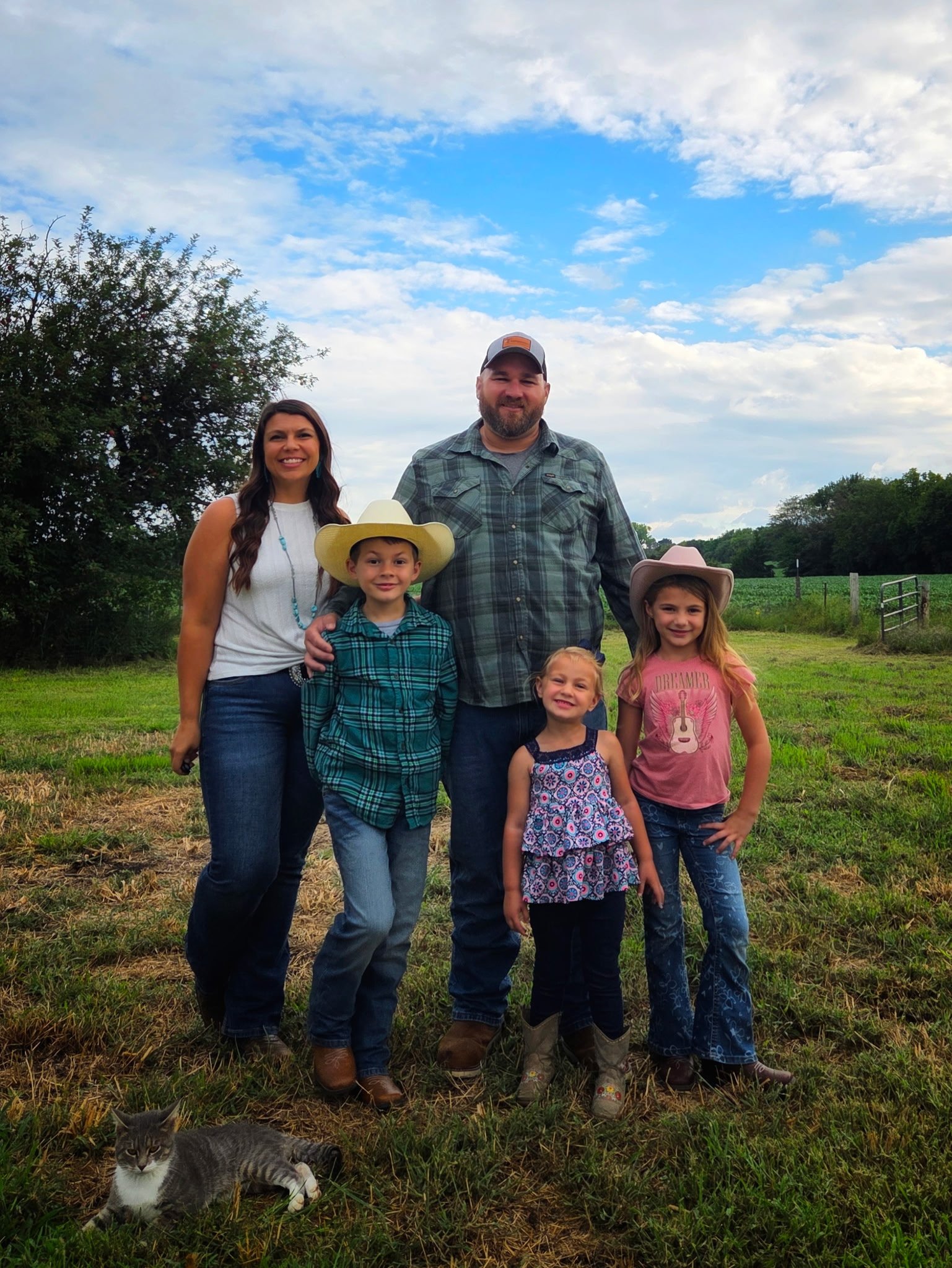
Along the way, we added three beautiful children to our family farm—Gunner, Caroline, and Sophia. They are now growing up around the same values that first drew me to agriculture: hard work, stewardship, and a love for animals.
Article By: Colton Lohse
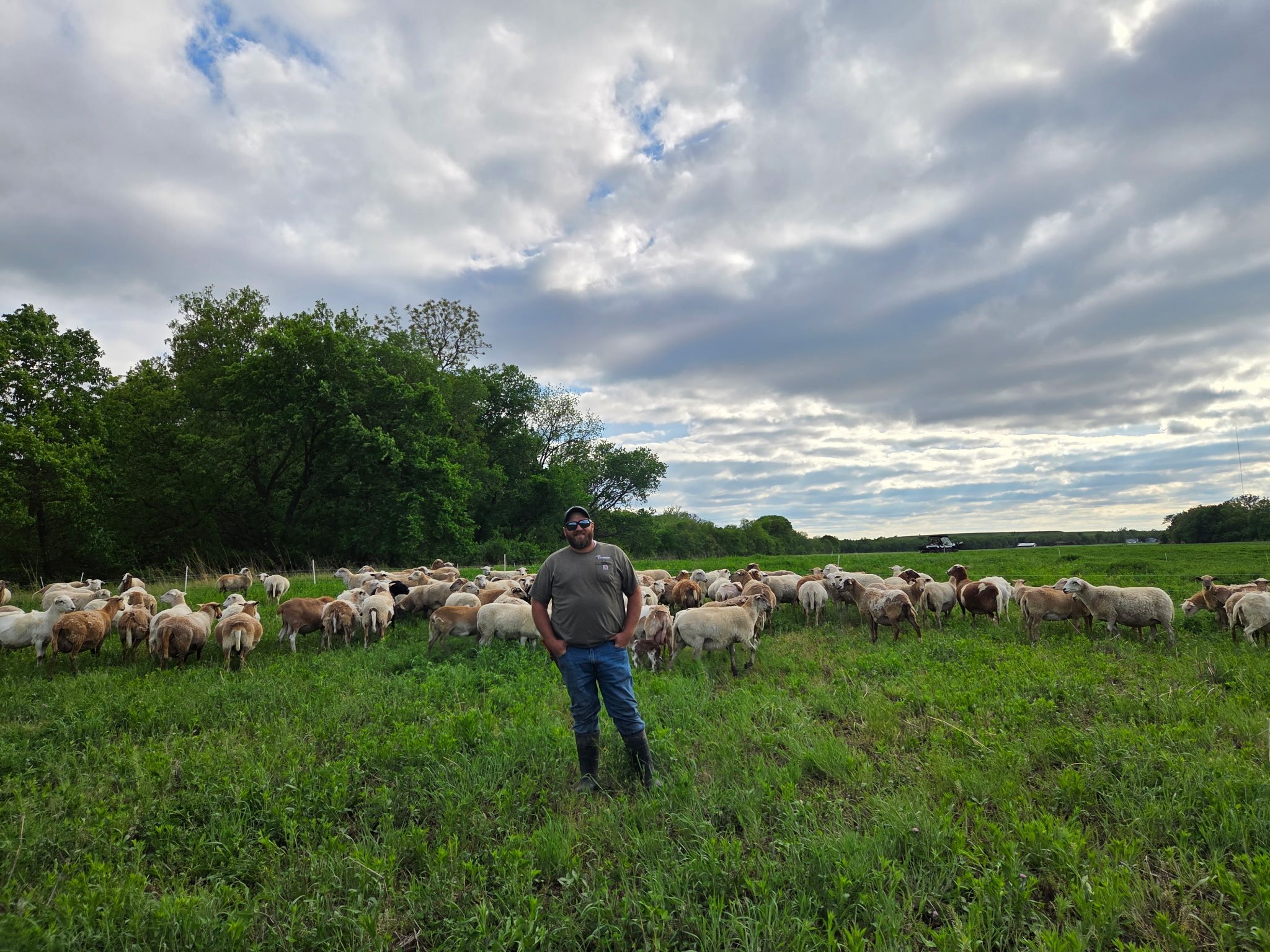
It has been a slow, 10-plus-year journey to get where we are today. If there is one lesson we’ve learned, it’s that you don’t have to start big to succeed in agriculture. Start where you are. Use what you have. Keep learning, keep improving, and be ready when opportunities arise. You never know where that first small step might lead.
Out of 650 applicants, Colton was one of 150 recent awardees of the USDA Advancing Markets for Producers (AMP) Grant Program, which is being administered by the America Lamb Board. It was through the Midwest Ag Conservation Network (MACN) KRC is a part of that Colton learned of this opportunity. MACN Coordinator (and Colton’s leaser), Jackie Keller, was sent the info from Marbleseed, the lead organization for this pilot project, which she forwarded onto Colton.
- Jackie Keller